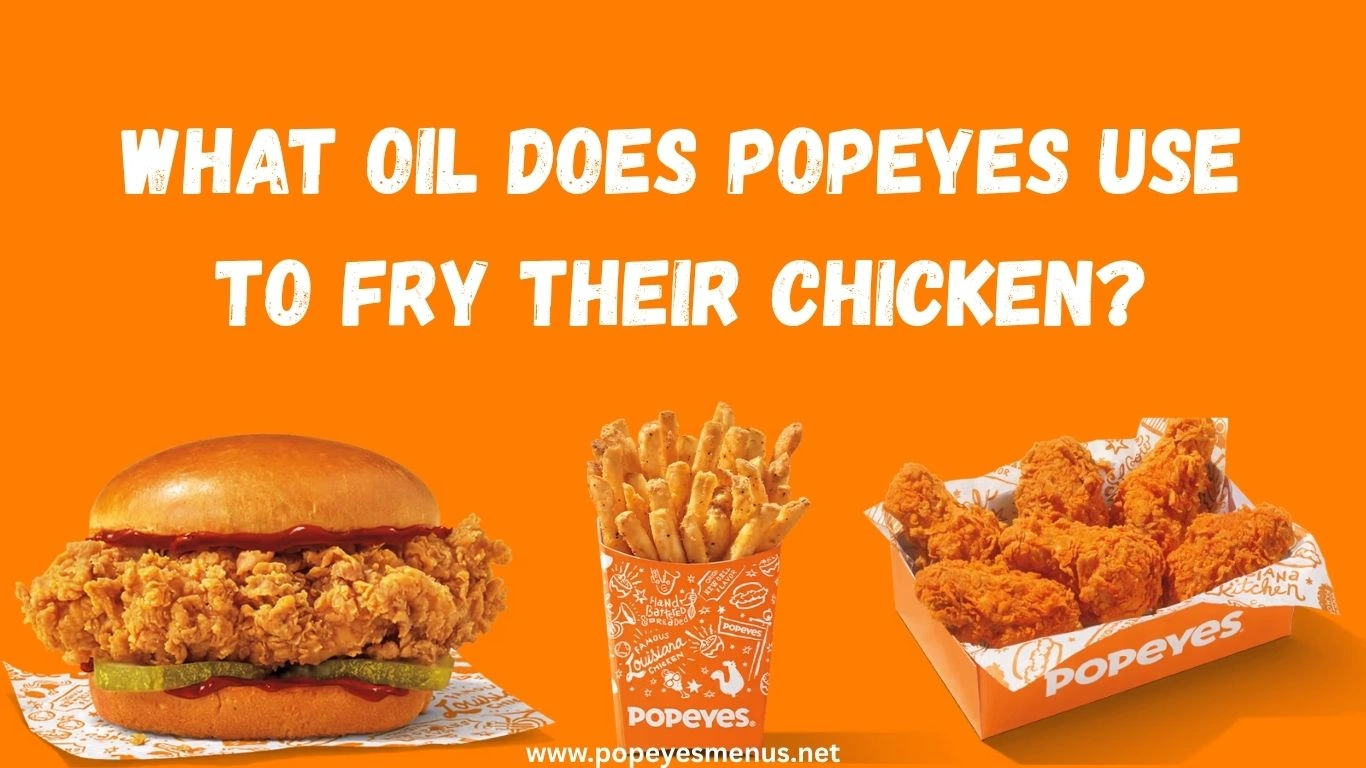
Popeyes fries its chicken in a blend of beef tallow and vegetable oil, which is a big part of why it tastes richer and crispier than chicken from chains that use only plant-based oils. According to Popeyes’ U.S. ingredient and allergen information, beef tallow (rendered beef fat) is used in its fryers — and importantly, peanut oil is not the frying medium.
Here’s the full picture of what Popeyes fries in, including beef tallow, peanut oil, MSG, and what it all means if you have allergies or dietary restrictions.
Does Popeyes Use Beef Tallow?
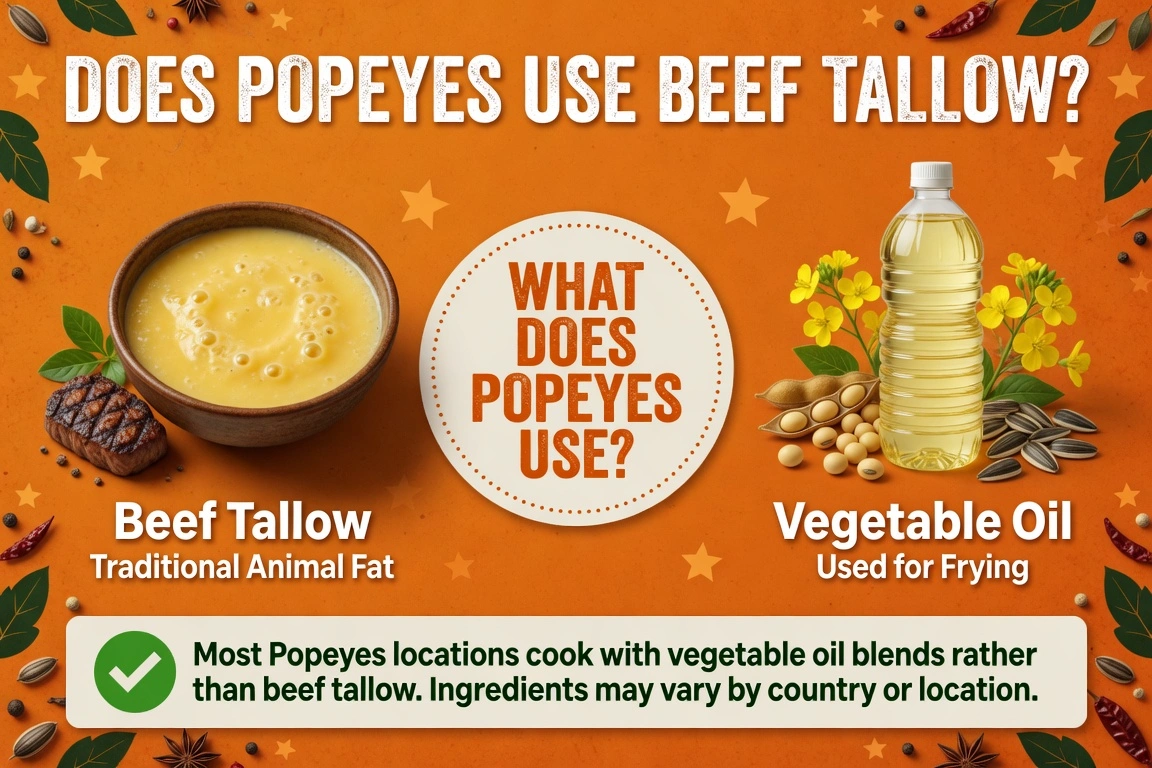
Yes. Popeyes uses beef tallow as part of its frying blend in the U.S., and the company’s own ingredient statements confirm beef tallow is used for frying. Unlike McDonald’s and many other chains that switched to fully vegetable-based oils decades ago, Popeyes kept beef tallow in the mix — and it’s one of the reasons the chicken has its signature flavor.
Why beef tallow matters for the taste and texture:
- Rich, savory flavor — tallow adds a deeper, “meatier” taste that vegetable oils can’t replicate.
- Extra-crispy crust — its high saturated-fat content helps create that golden, crunchy exterior.
- High smoke point — it holds up well to deep-frying temperatures without breaking down quickly.
One important note: because the chicken and most breaded items are fried in this beef-tallow blend, most of Popeyes’ fried menu is not vegetarian or vegan. Outside the U.S., some markets (such as halal or vegetarian-focused regions) may use 100% vegetable oil instead — so frying oil can differ by country.
What Other Oils Are in the Blend?
Alongside beef tallow, Popeyes’ frying blend commonly includes vegetable oils such as soybean and canola oil, and some individual menu items may use other oils like palm or cottonseed oil. The exact mix can vary by item and by location, and a few items are prepared differently — for example, certain products may be fried in a fully vegetable-oil blend. If a specific oil matters for your diet, it’s best to confirm at your local store.
Does Popeyes Use Peanut Oil?
No — peanut oil is not Popeyes’ frying oil, which is generally good news for people avoiding peanut oil. However, this does not mean Popeyes is allergy-safe:
- Shared fryers mean breaded items come into contact with wheat, soy, milk, and egg.
- Seafood like shrimp is often fried in the same oil, so there’s a real cross-contact risk for shellfish allergies.
- Some menu items still contain peanuts or tree nuts as ingredients, even though peanut oil isn’t used for frying.
If you have a serious allergy, “no peanut oil” is not enough on its own. Always check Popeyes’ official nutrition and allergen guide and speak with the staff at your specific location before ordering.
Does Popeyes Chicken Contain MSG?
Some items do. Popeyes’ nutrition and allergen information notes the presence of MSG (monosodium glutamate) in certain menu items — it’s part of what gives the seasoning its savory depth. If you’re sensitive to MSG or prefer to avoid it, review the official allergen guide for the specific items you plan to order, since not every item contains it.
Is Popeyes Chicken Real?
Yes — Popeyes uses real chicken. Its bone-in pieces are cut from whole chickens, and items like tenders and the chicken sandwich fillet are made from real, whole-muscle chicken rather than processed or reformed meat. The bold flavor comes from a buttermilk marinade and a heavily seasoned Cajun coating, not from artificial substitutes.
What Popeyes’ Frying Oil Means for Your Diet
Whether Popeyes works for your diet depends on what you’re watching for:
- Vegetarians/vegans: Most fried items are cooked in a beef-tallow blend, so they aren’t suitable.
- Halal diners: Beef tallow in U.S. fryers is a key consideration — see our guide on whether Popeyes is halal for the full nuance.
- Gluten-free/allergy: Shared fryers create cross-contact with wheat and other allergens; see gluten-free and vegan options at Popeyes before ordering.
- Seed-oil avoiders: The blend still contains vegetable oils, so it’s not seed-oil-free.
For a full look at what’s on offer, browse the full Popeyes menu with prices.
What to Know About Popeyes’ Frying Oil
The quick version:
- Popeyes fries in a beef tallow + vegetable oil blend in the U.S.
- No peanut oil is used — but shared fryers still pose cross-contact risks.
- MSG is present in some items; check the allergen guide.
- The chicken is real, whole chicken, not processed.
- Frying oil can vary by location and country, so confirm locally for dietary needs.
Because ingredient sourcing and oil blends can change over time, always verify with Popeyes’ official allergen guide if you have a specific dietary or medical concern.
Frequently Asked Questions
What oil does Popeyes use to fry chicken?
Popeyes fries in a blend of beef tallow and vegetable oils (commonly soybean and canola). The beef tallow gives the chicken its signature rich flavor and crispy crust.
Does Popeyes use beef tallow?
Yes. Popeyes’ U.S. ingredient statements confirm beef tallow is used in its fryers, which is why most of its fried items are not vegetarian or vegan.
Does Popeyes use peanut oil?
No, peanut oil is not used for frying. However, shared fryers and some nut-containing items mean Popeyes is not allergy-safe — always check the official allergen guide.
Does Popeyes chicken have MSG?
Some menu items contain MSG, according to Popeyes’ allergen information. Check the official guide for the specific items you plan to order.
Is Popeyes chicken real?
Yes. Popeyes uses real, whole chicken — bone-in pieces and whole-muscle fillets and tenders — seasoned with a buttermilk marinade and Cajun coating.
Is Popeyes safe for people with peanut allergies?
Popeyes doesn’t fry in peanut oil, but cross-contact with nuts and other allergens is possible due to shared equipment. Anyone with a serious allergy should check the allergen guide and ask staff first.